

A character sheet is valuable when it predicts behaviour. A page of favourite foods and childhood pets may be enjoyable world-building, but it will not necessarily tell you what your protagonist does when the easy escape requires betraying a friend.
Start with the pressure system
Write down the external goal, internal need, greatest anticipated loss, protective false belief and resources. Then add one contradiction. A generous person who uses money to avoid intimacy is immediately more playable than a list of positive traits.
Translate history into present behaviour
For each formative event, complete the sentence: “Because of this, they now…” The answer might shape what the character notices, whom they trust or which risk they refuse. Backstory becomes useful when it generates present action.
Map relationships as negotiations
For each important pair, note what each person wants, what they hide, what leverage they hold and what could reverse the relationship. Revisit the map after major turning points. These changing connections often supply the strongest material for your plot.
Define a perception filter
People do not observe neutrally. A paramedic notices breathing and exits; a status-conscious host notices shoes and seating. Record sensory priorities, a conversational defence and one subject the character avoids. Voice emerges from attention as much as vocabulary.
Run a scene simulation
Give the character bad news in a public place. What do they notice first? What do they conceal? Which resource do they reach for? What mistake does their false belief make likely? If the sheet cannot suggest an answer, replace trivia with stronger causal information.
Track the arc as choices
- The opening pattern that once kept them safe.
- A first event the pattern cannot solve.
- A costly attempt to double down.
- A recognition they can no longer avoid.
- A final choice that demonstrates change or refusal.
Connect these decisions to the structural beats when plotting your novel. An arc is not a mood slowly improving; it is a pattern being tested.
A lean reusable template
- story role, external goal and internal need
- fear, false belief and anticipated loss
- strength, damaging strategy and contradiction
- key relationships, secrets and leverage
- perception filter and speech under pressure
- opening pattern and final defining choice
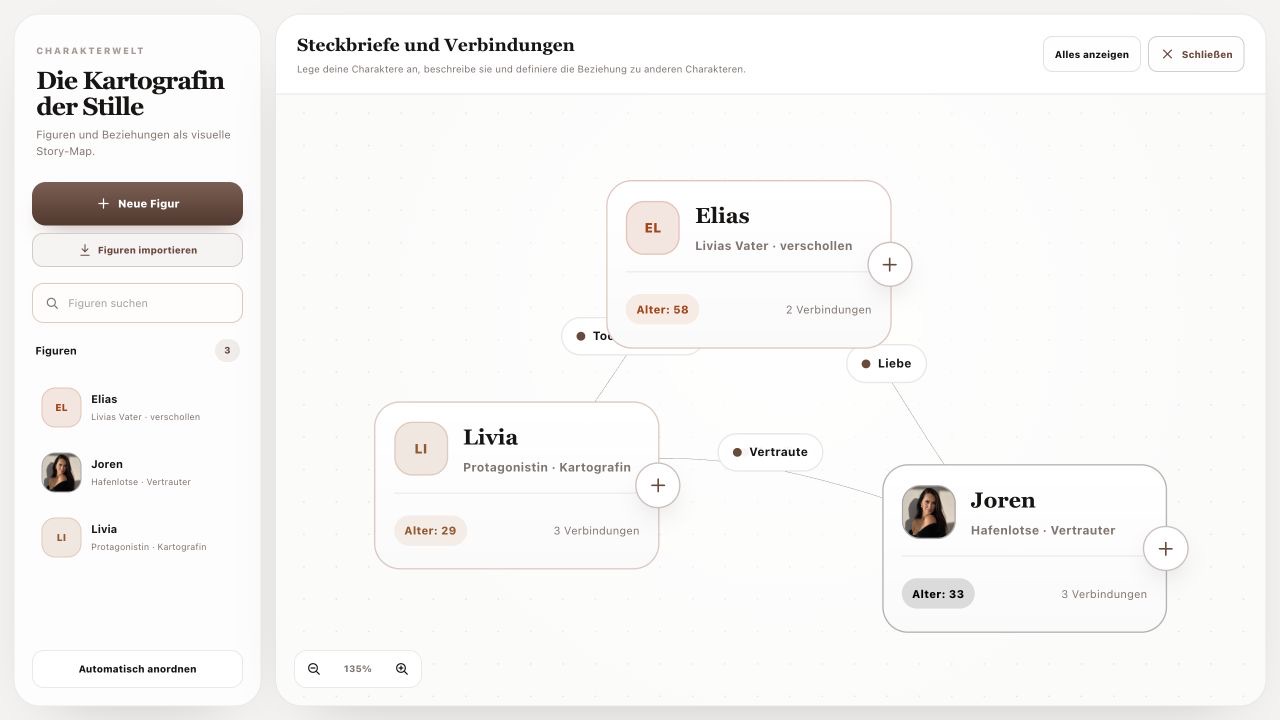
ManuBook keeps character profiles beside the book's plot and chapters so you can consult them while drafting. Keep the sheet alive and selective. Its purpose is not to complete a form; it is to make the next scene more inevitable and more surprising.
Build profiles that predict behaviour
A character sheet earns its place when it helps you choose an action under pressure. Replace decorative biography with decision variables: the goal the character admits, the need they disguise, the method they use to regain control, and the price they refuse to pay. Appearance still matters for continuity, but it should not crowd out the machinery of choice.
The contradiction interview
Do not ask what your protagonist likes. Ask what they condemn in others but excuse in themselves. Ask which compliment makes them suspicious and which small kindness they cannot accept. Then stage a moment in which the character's stated value and protective habit demand opposite actions.
| Profile element | Write this | Not merely this |
|---|---|---|
| Want | A specific outcome with urgency | General happiness |
| Defence | A repeated tactic for avoiding shame or loss | A personality label |
| Leverage | What this person controls in each key relationship | Who is ‘stronger’ overall |
| Limit | The cost that makes victory unacceptable | A random fear |
| Change proof | A final pressured action unlike the opening | A speech explaining growth |
Version relationships after turning points
Record each important relationship in both directions. What does Mara need from Jules? What does Jules need from Mara? Who holds information, status, access or emotional permission? After a midpoint revelation, update those balances. Otherwise the profile preserves the backstory while the novel has already moved on.
Character-sheet questions
Should I complete the sheet before drafting?
Complete only enough to create the first meaningful choices. Let the draft produce evidence, then revise the profile.
How do I avoid over-planning?
Give every field a job. If a fact neither protects continuity nor changes a scene, it can wait.
Do minor characters need private goals?
Even a one-scene character benefits from wanting something in the encounter. That prevents them from sounding like a delivery system for exposition.