

Marketing is the work of making the right book recognisable to the right reader and reducing friction between interest and reading. Repeating “buy my book” is one tactic, and usually a weak one. A durable system creates discovery before, during and long after release.
Fix the product signal first
Cover, title, description, sample, categories and price should describe one coherent reading experience. Define the core audience and the emotional or practical promise. Traffic cannot repair confused positioning.
Own the centre of the relationship
Use a useful author website and permission-based mailing list as the stable centre. Social channels can distribute ideas, but algorithms and accounts change. Give every book a permanent page and every subscriber a clear expectation.
Create from three repeatable themes
- The book: premise, world, research, characters and extracts.
- The author: process, decisions, events and credible personal context.
- The reader: recommendations, questions and useful material around the genre.
One substantial newsletter or article can become several smaller channel-specific pieces. Repurposing is not duplication when the framing fits the place.
Run a phased launch
Preparation includes retailer pages, files, advance copies, sample, email sequence and tracking links. Release week concentrates attention and answers. The post-launch phase develops search content, partnerships, events and selective advertising. If Amazon is central, coordinate with the KDP production checklist.
Invite reviews ethically
Offer advance or review copies and request an honest voluntary opinion. Follow disclosure law and each retailer's rules. Do not buy reviews or make positivity a condition. Trust compounds more reliably than manipulated social proof.
Advertise only after conversion basics work
Test the cover, copy, sample and audience first. Set a loss limit and understand royalty after delivery costs. Our article on author earnings helps distinguish gross sales from usable margin.
Measure the journey
Track mailing-list growth, sample downloads, book-page clicks, conversion, cost per sale, read-through and repeat purchases. A large audience that takes no relevant action may be less valuable than a small aligned one.
A sustainable weekly system
- one substantial reader-facing piece;
- two or three adapted short posts;
- one relationship action such as a partnership or event pitch;
- a brief measurement review;
- protected writing time that marketing cannot consume.
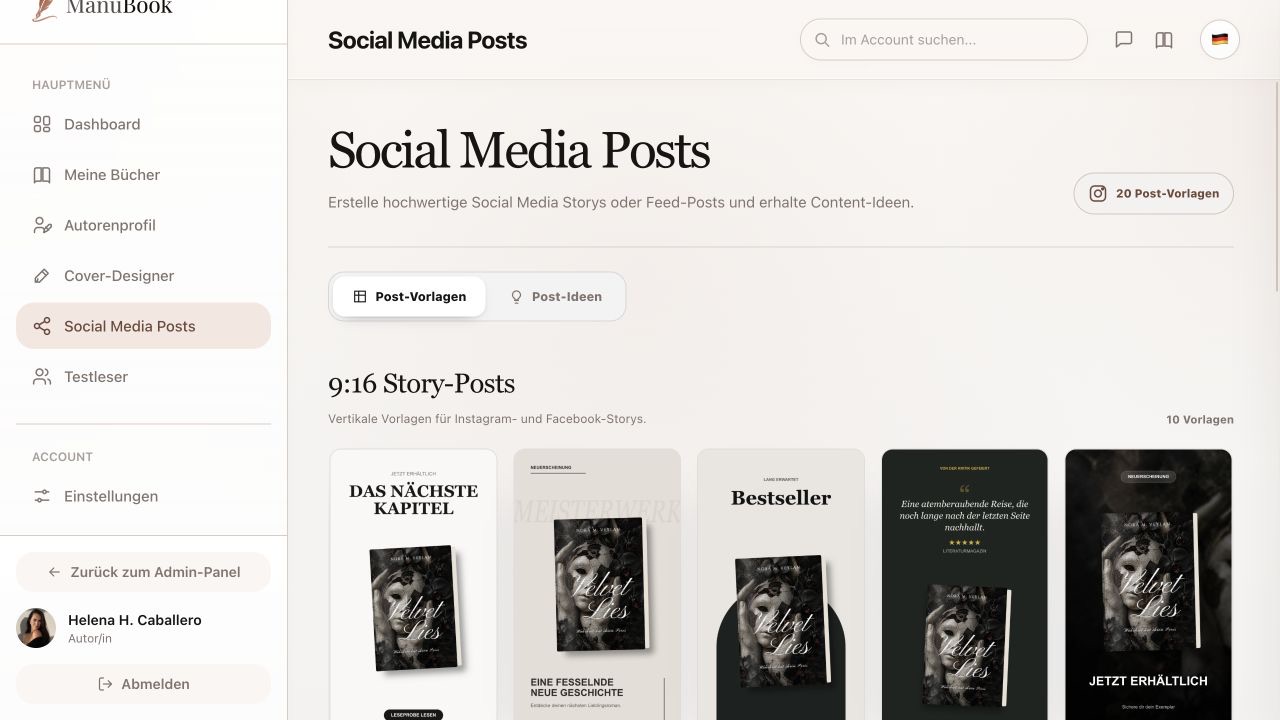
ManuBook can support author profiles, cover-based visuals and social content around each project. Use tools to stay coherent, not to fill every channel. The best marketing system leaves enough energy to write the next book.
Plan for a reader action, not “visibility”
Every campaign stage should make one next action easier: open the sample, join the list, preorder, attend, review or continue the series. Content may entertain without asking for a sale, but it still needs a role in the reader journey.

| Stage | Reader uncertainty | Useful proof |
|---|---|---|
| Discovery | Is this for me? | Genre signals, premise, tone |
| Interest | What makes it distinct? | Character problem, sample, research |
| Trust | Will it deliver? | Accurate content notes, credible responses, proof quality |
| Action | Where and in which format? | Clear retailer/library/direct paths |
| Retention | Why stay connected? | Series guidance, events, meaningful bonus |
Measure movement between stages
Follower count is context. Track link clicks, sample starts, sign-ups, conversion and unsubscribes alongside time spent. Use distinct links where practical. If a channel takes six hours per week and produces no qualified movement, redesign or stop it. Protect the time that produces the next book.
Author marketing decisions
Do I need to post daily?
No. A sustainable, recognisable cadence with useful destinations is stronger than a short daily burst followed by exhaustion.
When are ads useful?
When cover, product copy, audience, retailer page and measurement already work. Begin with capped tests and a written stop condition.
What is an owned audience?
A connection you control more directly, commonly an email list with valid consent and a useful website destination, rather than dependence on one platform feed.