English-language markets often discuss standard manuscript format rather than the German Normseite. Both solve a similar problem: letting publishing professionals read, edit and estimate a text without confusing it with final book design. Today, word count is frequently the main planning measure.
Why finished pages are misleading
Trim, font, leading, margins, dialogue and illustrations can change the number of printed pages dramatically. A clean manuscript format keeps the source readable and makes comparisons easier before typesetting.
Common conventions
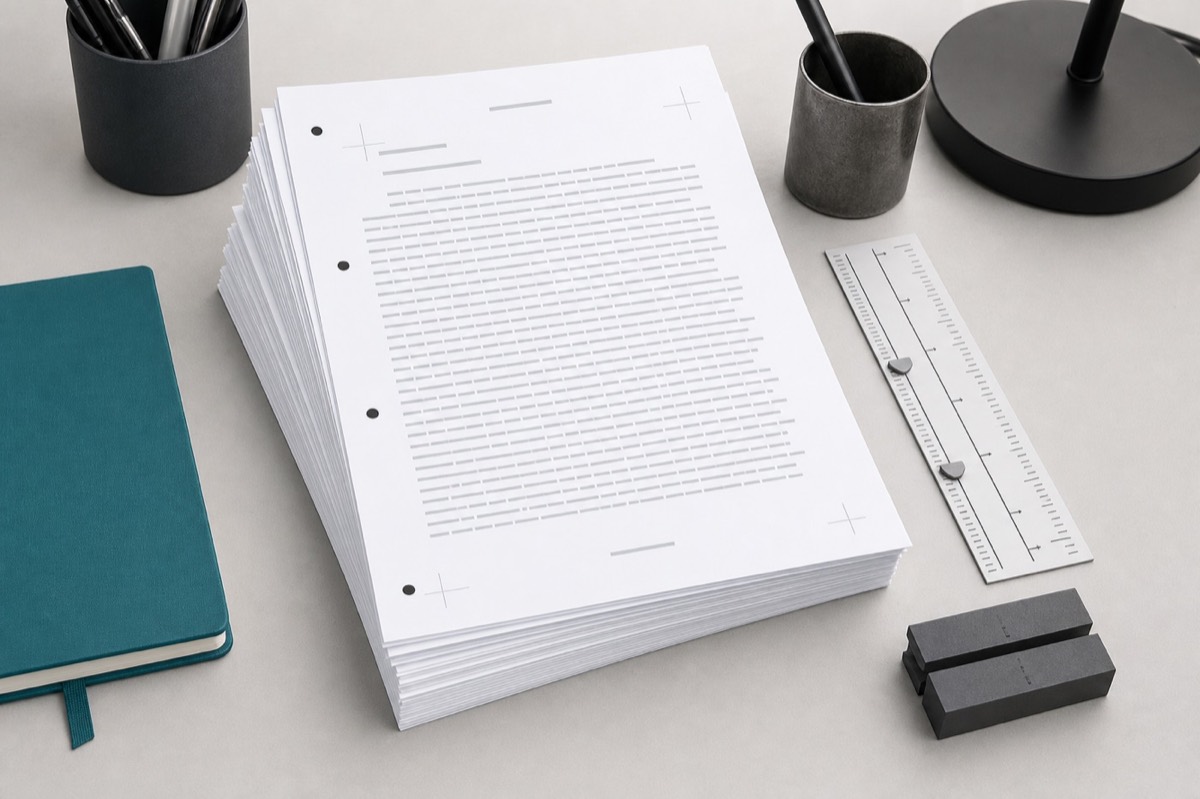
Typical requests include a readable 12-point font, double spacing, one-inch margins, paragraph indents, page numbers and identifying headers. Requirements vary between agents, publishers, contests and editors. Their current instructions always take precedence.
Words, characters and page estimates
A historical estimate uses roughly 250 words per double-spaced manuscript page. It is not exact; dialogue and paragraph shape change the result. German-language Normseite calculations often use characters including spaces. State the actual word count whenever possible.
An estimate is not a visual page guarantee
Dialogue-heavy fiction creates more visible pages than dense exposition at the same word count. An editor may quote from word count while an agency wants a formatted file. Clarify the definition and provide the underlying count rather than presenting an estimate as exact.
Apply a template to a copy
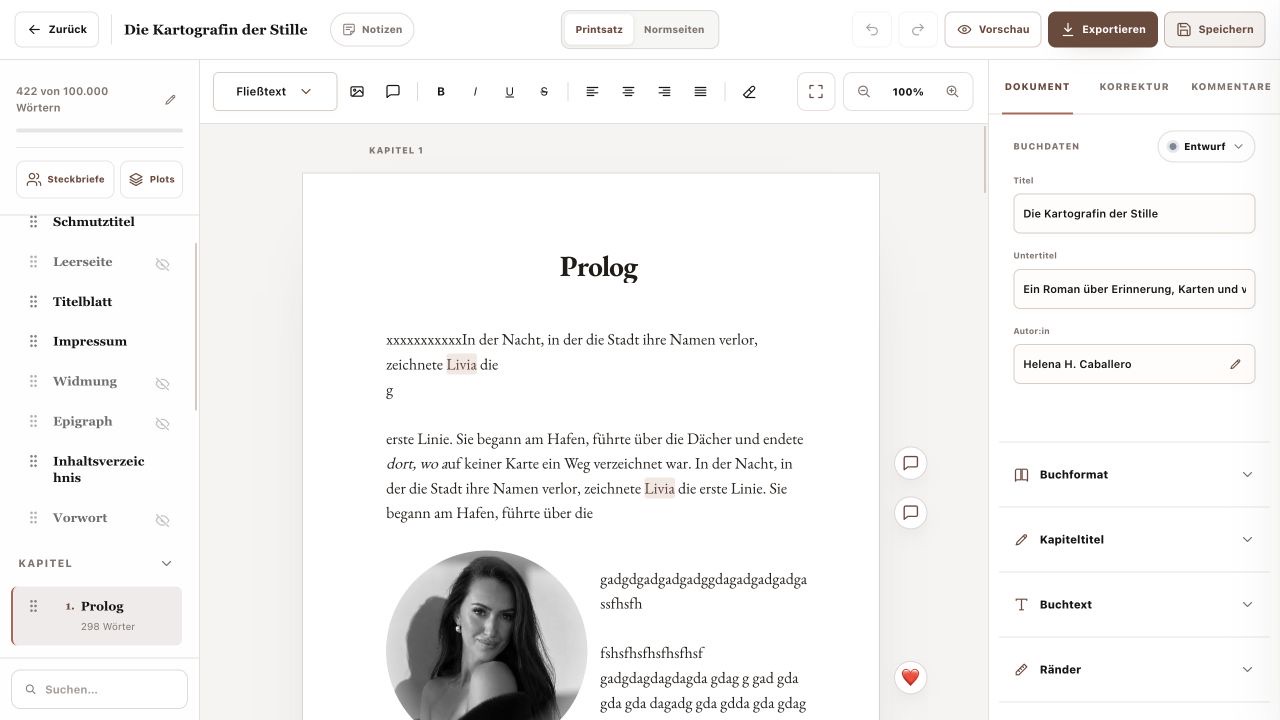
Use paragraph, character and page styles systematically on a copy of the approved text. Check chapter breaks, special characters and headers afterwards. A submission template is meant to support reading and comparison, not to force a manuscript toward a preferred page total.
When it is useful
- agent or publisher submissions;
- editing and translation quotations;
- production planning before layout;
- not as the design for a reader edition.
Keep formatting mechanical and clean
Do not create spacing with repeated spaces or hard returns. Use styles, consistent scene breaks and a simple file name. Retain a private version with comments while sending a clean copy. The broader source-file workflow is covered in what is a manuscript?
Separate submission from print design
A standard manuscript is made for evaluation and editing. A paperback interior is designed for comfortable reading and binding. Converting one into the other is a production stage, not a change of margins alone.
ManuBook can keep one structured manuscript and create outputs for different purposes. Always confirm the recipient's exact format before delivery.
The German Normseite is an estimating convention
German-language editorial workflows often use roughly 30 lines of about 60 characters—a working unit of around 1,800 characters including spaces. It is useful for comparing manuscripts and pricing services, not predicting final printed pages. Dialogue and paragraphing create white space, so a formatted file and a pure character calculation can differ.
| Measure | Useful for | Cannot predict |
|---|---|---|
| Characters with spaces | German editorial estimates | Exact print extent |
| Words | Draft targets and international discussion | Spine width |
| Formatted Standard manuscript pages | Readable editing hand-off | Retail page count |
| Production pages | Print geometry and cost | Editorial workload by itself |