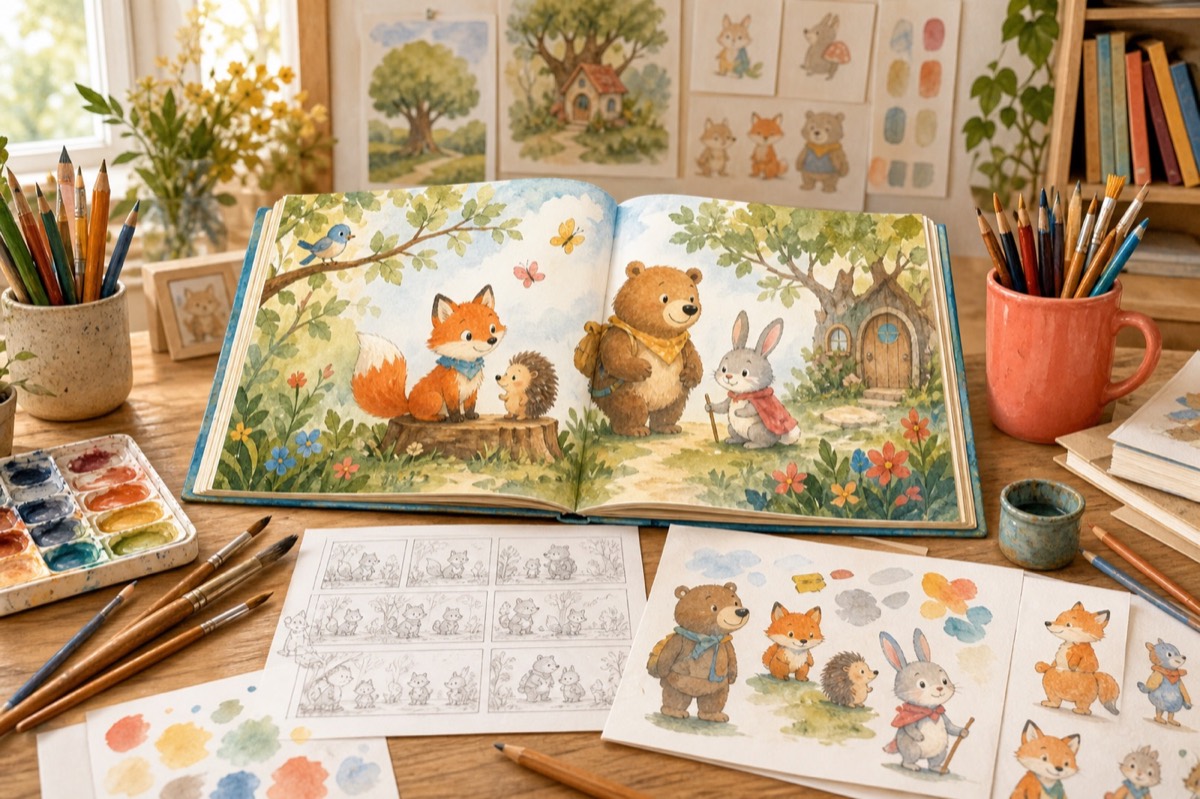
A children's book is designed for a developmental stage and a reading situation. A toddler listening on an adult's lap, a new independent reader and a ten-year-old absorbed in a novel need different language, pacing, typography and visual support.
Define reader and reading context
Record a narrow age range and whether the book will be read aloud, shared or read independently. Study current titles at that level. Notice length, page density, vocabulary and how much interpretation the pictures carry.
Give the child protagonist meaningful action
Build the story around a desire and a problem the child can influence. Adults may support safety, but a solution delivered entirely by an adult weakens identification. Theme should emerge through choices rather than a closing lecture.
Write for the ear and the page turn
Read the text aloud repeatedly. Remove phrases that explain the illustration. End spreads with a question, action or visual reveal that invites the turn. Repetition can build participation when it changes or accumulates.
Make a complete dummy early
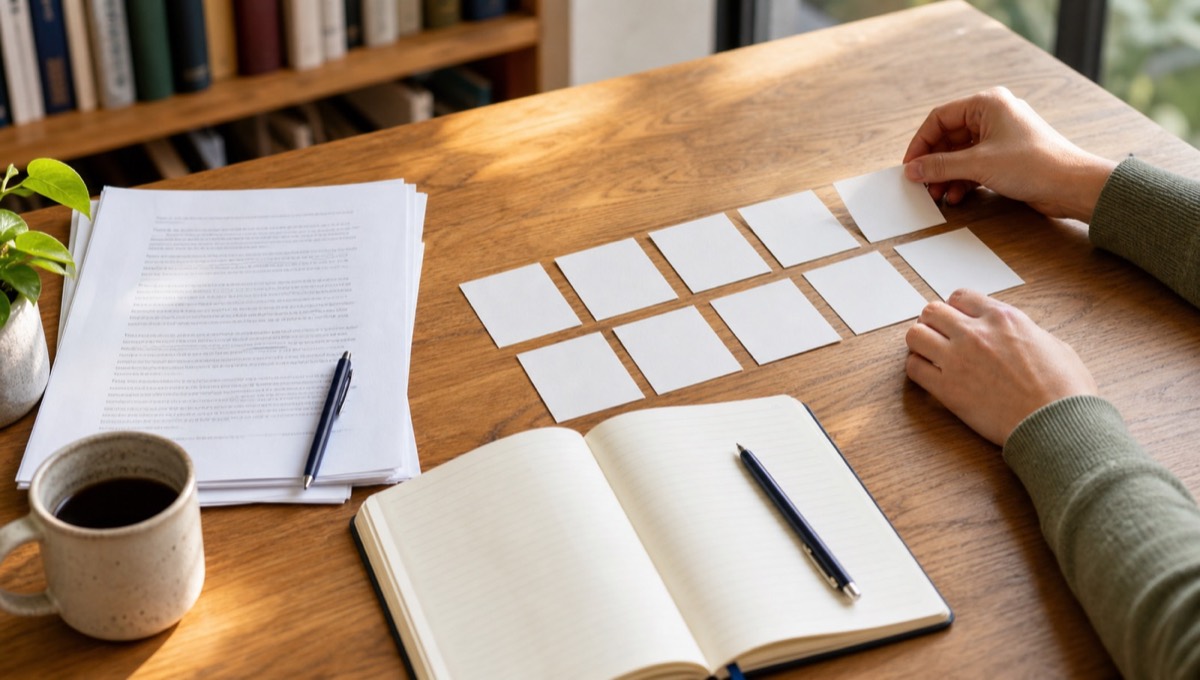
Fold a miniature or use simple digital spreads. Place all text and rough image blocks, including title and end matter. The dummy reveals cramped passages, weak turns and costly extra art before finished illustration begins.
Commission art with a clear agreement
Define character development, number and type of illustrations, rough and final stages, revisions, deadlines, file specifications, credit and usage rights. Clarify cover, promotion, territories, languages and merchandise rather than assuming them.
Observe real reading
Watch where children interrupt, predict, lose attention or return to an image. Ask them to retell the story or describe the character's goal. Adults can comment on suitability and repeated-reading experience, but children reveal comprehension differently.
Produce the physical object for small hands
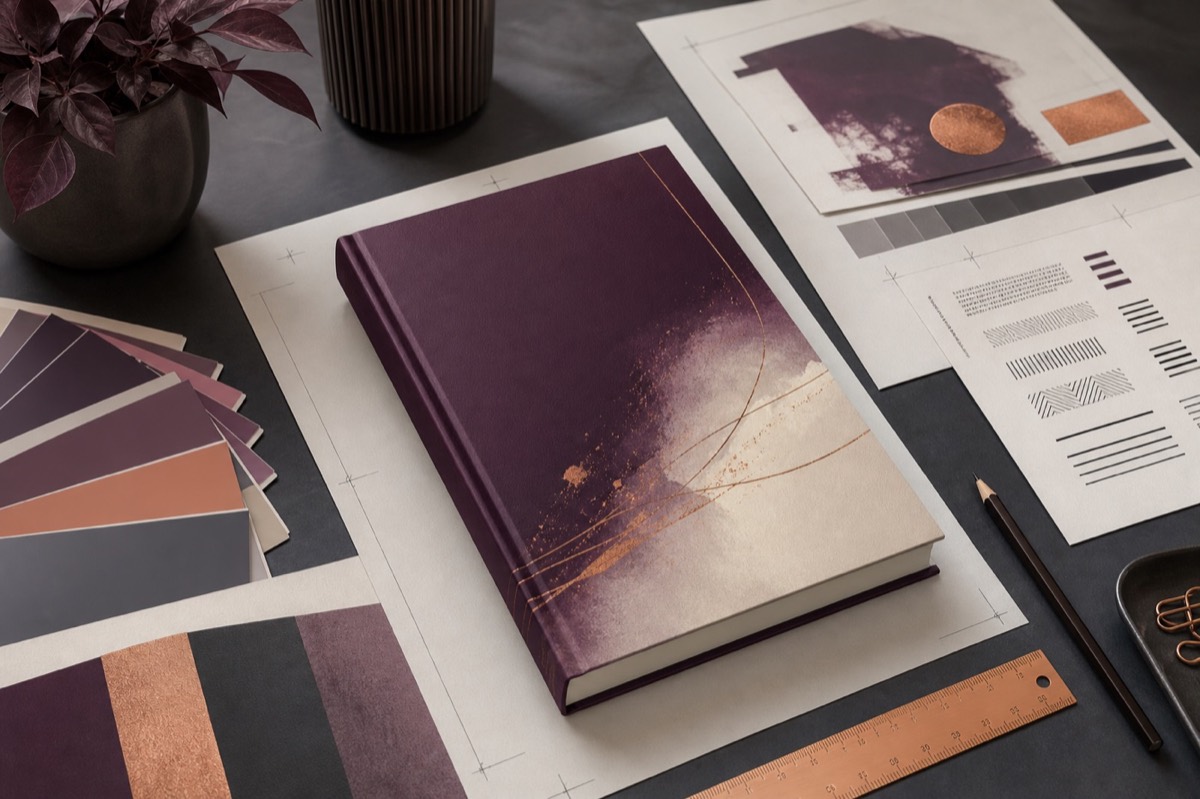
Test type size, contrast, paper, durability, gutter loss and image cropping. The cover addresses the adult buyer and child reader at once. Continue with the practical guides to cover design and publishing.
Final questions
- Is the age and reading situation specific?
- Does the child affect the outcome?
- Do words and images contribute different information?
- Has the complete dummy been tested before final art?
- Are rights and deliverables documented?
ManuBook can organise the text, sequence, cover and edition exports within one project. Illustration-led books still benefit greatly from specialist designers who understand pacing, colour and print production for children.
Define the reading event, not just “children”
Who holds the book? Is an adult reading aloud? Can the child decode independently? How long does one sitting last? Those answers shape sentence design, page turns, type size, image responsibility and emotional distance. Age bands are guides; observed readers are evidence.
| Form | Where meaning lives | Prototype question |
|---|---|---|
| Board/picture book | Image and page turn carry story | Does each spread alter what the child expects? |
| Read-aloud | Voice carries rhythm; art expands context | Can an adult read it naturally without repair? |
| Early reader | Typography and syntax support decoding | Does difficulty rise intentionally? |
| Middle-grade novel | Child agency drives prose narrative | Are stakes immediate to the child's world? |
Make a cheap dummy before expensive art
Fold paper, allocate front matter, and give every spread four notes: text amount, visible action, information only the image supplies, and the reason to turn the page. If text and illustration repeat each other, remove one layer or give the image a second job.
Observe test readings
Record where eyes pause, adults stumble, children interrupt, and pages are revisited. “Did you like it?” produces politeness. “Show me where you knew she was lying” reveals comprehension. Test with several children near the intended reading level and protect their privacy in any notes or recordings.